
The Centre of Registers incident – a timely reminder to take care of home internet security
600,000 records leaked from the Centre of Registers are yet another reminder that cyber incidents today affect not only state institutions or large companies, but ordinary residents too. More and more of our daily lives are moving online – from work and shopping to children's leisure or managing smart home devices. Dozens of different devices connect to the home internet. And with them grow the risks that many families still only consider once they face a real incident.
As internet technology expert and head of „Etanetas“ – one of the first internet service providers in Lithuania – Artur Stefanovič notes, just a few years ago many people associated cyber threats mainly with large companies, banks or state institutions, yet today the risks are increasingly moving into the home environment too. A single home „Wi-Fi“ network now often connects an entire family's daily routine – parents' work computers, children's phones and tablets, smart TVs, gaming consoles, surveillance cameras, robot vacuum cleaners or even smartwatches.
According to international research, the average household today already has more than 10 internet-connected devices – from phones to smart home systems.
„The more of our daily lives move into the digital space, the more important it becomes to have not only a fast, but also a secure internet connection. Many people still pay a lot of attention to protecting their phone or computer, yet forget that the weakest point is often the home network itself. It is through this network that not only entertainment or information travels today, but also sensitive personal data, logins to banks, work systems and other everyday services,“ says A. Stefanovič.
The biggest risks today are not where most people think
If you think that stronger passwords or antivirus software are enough for online security today – you are mistaken. Today a significant share of threats come not through viruses, but through everyday browsing, fake links, apps, social networks or even smart devices connected to the home network.
According to the internet technology expert, a considerable share of residents still use old network equipment at home. Another problem is that all devices often use the same network – from work computers to TVs, surveillance cameras or robot vacuum cleaners. In such cases, even one poorly protected device can become an additional weak point for the entire home network.
In recent years, various fraud schemes have been growing rapidly and becoming ever harder to recognise. According to the National Cyber Security Centre, the number of fraud cases and attempts to steal residents' data recorded in Lithuania is increasing every year.
Fraudsters today increasingly use the names of real institutions, couriers or banks, making it considerably harder to distinguish fake messages or pages. Malicious links reach people today not only by email, but also via SMS messages, social networks or even gaming platforms. Sometimes a single click is enough to expose login details, banking information or other sensitive personal data.
„A separate group of risks today is related to children's use of the internet. Children and teenagers spend a lot of time on social networks, gaming platforms or various apps, but are not always able to recognise threats. Harmful content, messages from strangers, fake links or accidental purchases are becoming increasingly common problems that families face.
If the home network's protection fails, the consequences often go beyond mere technical inconveniences. Residents may lose access to their accounts, end up on fraudulent pages, suffer financial losses or expose sensitive data. Meanwhile, insecure smart devices can become an additional weak link in the entire home network,“ affirms A. Stefanovič.
Secure internet starts with everyday habits
In the internet technology expert's view, although cyber threats are becoming ever more sophisticated, a significant share of risks can be reduced with fairly simple solutions.
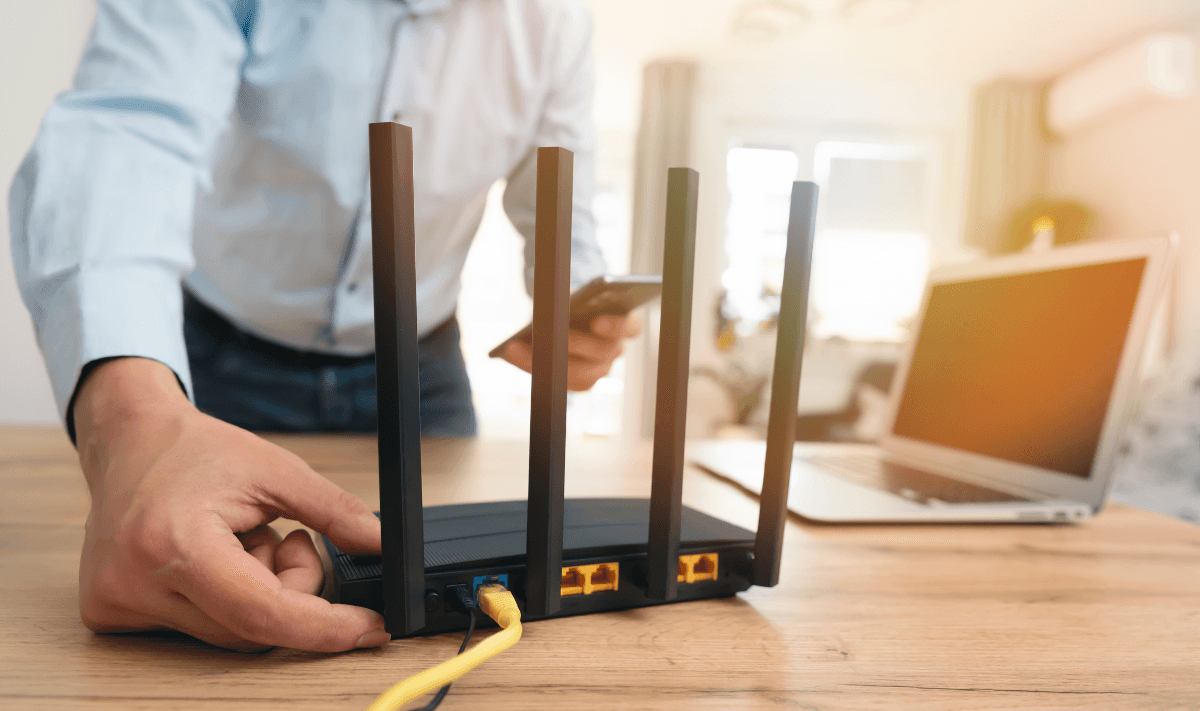
First of all, it is worth paying more attention to router settings, regularly updating the equipment used, changing factory passwords or creating a separate network for guests and smart devices.
Second, an open conversation with family members – especially children – about safe online behaviour, possible risks and responsible use of digital platforms is no less important. Technology today is becoming part of the everyday family environment, so digital security is increasingly becoming not only a technical matter, but also a question of everyday communication.
The attitude towards the internet provider is changing too. Today people expect from it not only a fast connection, but also help in creating a safer home environment. That is why it is worth paying more attention to what additional security solutions an internet provider can offer – for example, advising how to configure the home „Wi-Fi“ more securely, how to separate the devices children use from work computers, how to protect against harmful content or what to do so that smart devices connected to the network do not become an additional risk.
„The more of our lives move online, the clearer it becomes that secure home internet today is no longer a luxury or extra protection, but an essential part of daily life. Increasingly, not only the security of our data depends on it, but also the family's peace of mind, children's safety and a reliable daily routine,“ says the head of „Etanetas“.