
Lithuania has one of the cheapest internet services in the European Union
A 2024 international study conducted by Cable.co.uk showed that Lithuania has one of the cheapest internet services in the European Union (EU). The study's data shows that for fixed-line home internet, users in Lithuania paid around €15.7 per month on average. Our country ranked 4th in the EU by fixed internet price.
Internet was cheaper than for Lithuanians only for residents of Romania — around €8, Bulgaria — €9.7 and Latvia — €15.4.
For comparison, Cable.co.uk's data shows that in countries such as Iceland the internet cost a user around €70 per month on average, and in Norway — €72. In Luxembourg, a 1 Gb/s internet plan cost around €50.
Internet technology experts emphasise that a country's standard of living is not the only and main factor determining internet prices. Although at first glance it might seem precisely so.
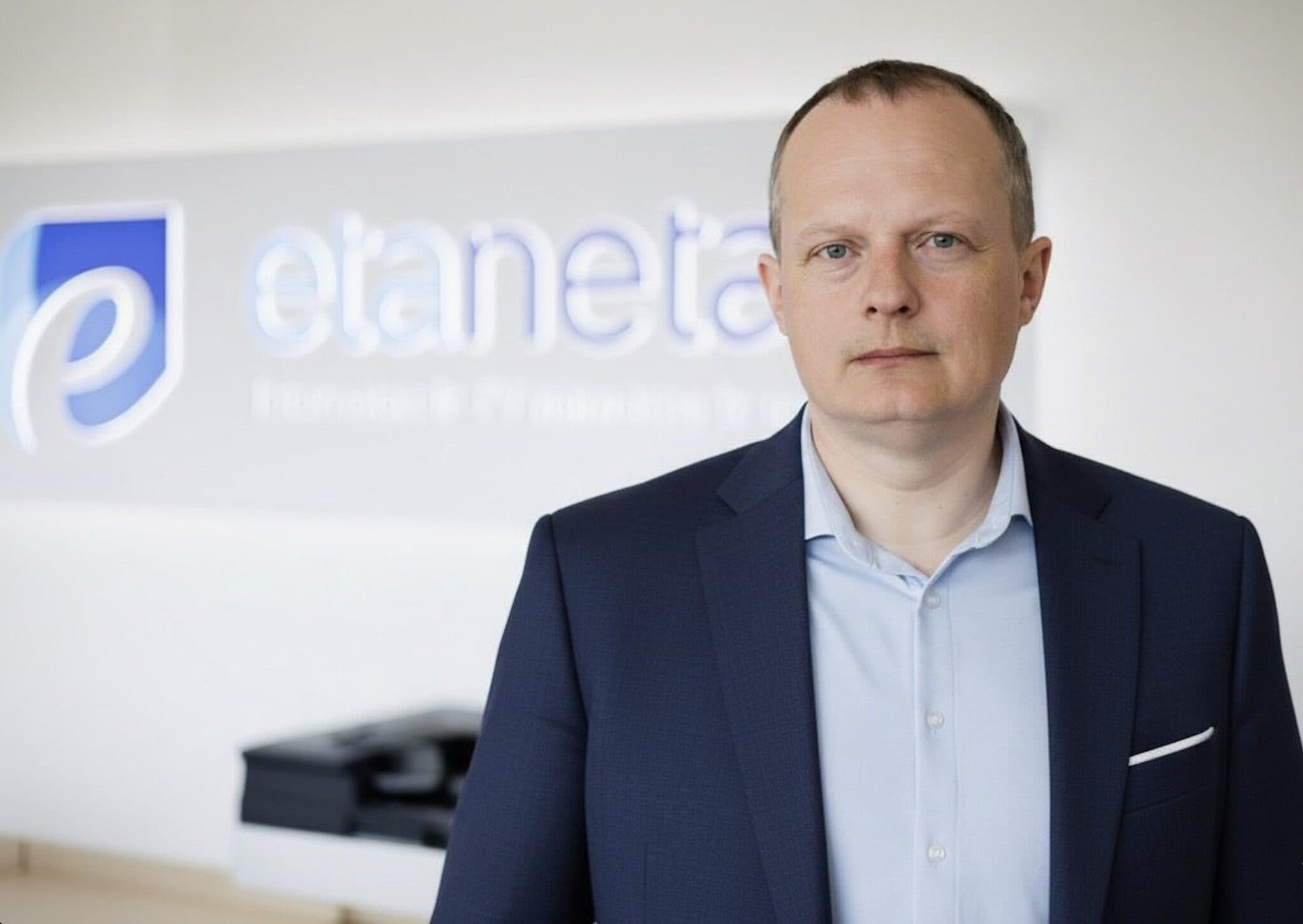
According to internet technology expert Artur Stefanovič, CEO of Etanetas, one of the first internet providers in Lithuania, prices depend very strongly on how many potential internet users there are in the country and what the competition is like among internet providers.
He recalls that EU telecommunications policy has long sought to encourage competition — for example, by obliging the largest operators to open up infrastructure to new market players.
Not all countries managed to do this, but Lithuania is one of those where high-quality internet can be offered not only by the largest market players.
"In countries where there are many internet providers relative to the population, competition allows fast internet to be provided at non-inflated prices. This is precisely the case in Lithuania, where the population does not reach three million, but dozens of providers operate — both large and smaller regional ones. As a result, we have one of the widest fibre and broadband internet coverages in Europe — about 95% of households — and the services are inexpensive, fast and accessible.
Meanwhile, for example, in the Netherlands, where almost 20 million people live, consumer organisations complain that the tandem of two dominant providers limits choice and keeps prices high. The situation is similar in Germany, where about 80 million people live, and almost half of the market is controlled by a few large operators," says A. Stefanovič.
According to the expert, Lithuania is a great proof that cheaper internet by no means implies poorer internet quality itself.
"In Lithuania people have not only cheap but also high-quality, stable internet, because the country has a large fibre-optic coverage. Such a connection can now offer internet speeds reaching up to 10 Gb/s. According to the Communications Regulatory Authority, at the end of 2024, 1.17 million households could use public fixed-line networks. Fibre was the most popular — it was used by 62.2% of the country's households. Over the year, fibre-optic network coverage grew by 6.2%, with another 54,700 households connected to it. In large cities, as many as 91.8% of households were equipped with fibre," notes the Etanetas CEO.
According to the expert, competition affects not only prices and internet quality. The more choice a consumer has, the more providers are forced to take customers' needs into account. If there is no competition, providers can pay less heed to consumers' expectations.
"It is normal for competition to encourage innovation — providers try to stand out by deploying new technologies and compete not only on prices but also on quality: they invest in infrastructure, offer faster internet and a more reliable connection.
On the other hand, one should always keep in mind that these are not the only benefits when we speak of competition. A larger number of providers encourages more transparent business methods. When a consumer has a choice, providers cannot afford to treat customers badly — otherwise they will switch to a competitor. This forces them to maintain higher service standards, to draw up contracts more honestly and to avoid hidden fees. In short, the greater the competition, the greater the consumer's power," explains the expert.
In Lithuania, a favourable environment has formed for the establishment of not only international but also Lithuanian internet providers. According to the Etanetas CEO, this is also one of the reasons that allows offering a competitive internet price. Lithuanian companies more often than international ones direct their profit towards the company's expansion, infrastructure and the creation of new jobs.
According to data from the State Data Agency, in 2024 a total of 90.4% of Lithuanian households had internet access at home — almost 2% more than in 2023 and about 8% more than in 2020. In cities, almost 93% of households had internet access last year, and in the regions — more than 85%.
Meanwhile, the latest Eurostat data shows that from 2014 to 2024, internet access in households in Lithuania grew by as much as 25%, and this is one of the most significant changes in all of Europe. While a decade ago Lithuania lagged behind the European average by about 15 percentage points on this indicator, it is now almost identical.